Some procedures are avoided less because of the procedure than because of the appointment: the length, the number of injections, the noise, the feeling of not being in control. Sedation changes the appointment rather than the dentistry. Louisville patients ask about it most often for the three procedures below.
The procedures that come up most often
Extractions and wisdom teeth, root canals, implant placement, and anything that needs more than one sitting. Published guidance links the choice of sedation type to procedure length as well as to anxiety, so a longer surgical appointment is exactly the situation where a deeper route gets considered rather than an inhaled one.
What sedation does not change is the treatment itself. The diagnosis, the plan, the aftercare and the risks are the same. What changes is whether you are able to sit through it, and how much of it you remember afterwards.
It is worth being clear with yourself about which part is the problem. Patients who describe themselves as terrified of the dentist are often specifically frightened of the injection, or of the length of a surgical appointment, and each of those points at a slightly different plan.
Who provides what, and why that decides your options
Extractions, implants and other surgery are often carried out by an oral surgeon, who may provide the anaesthesia themselves. In a general dental office, intravenous sedation may instead be given by a dental anesthesiologist while your dentist performs the treatment. Published guidance describes both arrangements.
So the practical question is not "do you offer sedation" but "which sedation do you provide for this procedure, and who delivers it". A practice that answers vaguely is worth pressing. The answer determines the fee, the monitoring and whether you need an escort.
If the answer is that the practice does not offer what you need, that is not a dead end. It is information you can act on before committing to a treatment plan, and it is exactly what a matching service is for.
The cost structure, without the marketing gloss
Sedation is charged per event, on top of the procedure. Published ranges are $50 to $150 per visit for inhaled sedation, $150 to $500 per appointment for a prescription sedative taken beforehand, $250 to $1,000 or more per visit for intravenous sedation, and $800 to $2,000 per procedure where general anaesthesia is used in an oral-surgery setting.
Dental plans frequently exclude or cap sedation, so the sedation line often comes out of pocket even when the procedure is covered. Ask which code will appear on the plan - D9230 for inhaled, D9248 for non-IV oral conscious sedation, D9239 or D9243 for intravenous - and what the out-of-pocket total is if the plan denies it.
Two questions people forget: whether the pre-sedation assessment is charged separately, and what the fee policy is if the visit has to be extended or rescheduled. Neither has a published answer; both have to come from the practice in writing.
Planning it sensibly when several procedures are needed
If several items of treatment are needed, one longer sedation appointment usually beats three shorter ones, because the sedation fee is charged per event rather than per procedure. That is the main cost lever in a sedation plan - sedation itself is not discounted by combining work, but repeat sedation events disappear.
The trade-off is that a longer appointment is one of the published reasons a deeper sedation type gets chosen, so the two decisions move together. Ask the question directly: can these be combined under one sedation, and what would stop you doing that?
Then plan the day honestly. A responsible adult escort, somebody with you afterwards, and about 24 hours before you are back to normal for the prescription, intravenous and general routes. Inhaled sedation is the exception - it clears within minutes and does not need an escort.
What to settle before you commit to a plan
Get the sedation type in writing, with the fee, the code, the preparation instructions and the escort requirement. Confirm who monitors you and what they monitor. Ask what happens if the procedure runs longer than expected, and what the plan is if your anxiety turns out to be stronger than you both assumed.
Those answers, in writing, are what let you compare two practices honestly. Published ranges and codes give you the framework; only the practice can tell you what it actually does.
Comparing the four options at a glance
The published detail behind each route, so the trade-offs are visible before you talk to a practice.
| Option | How it is given | Getting home | Published range |
|---|---|---|---|
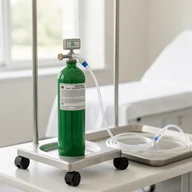
| Nitrous oxide | Inhaled through a mask or nosepiece, effective within three to five minutes | You can drive yourself | $50 to $150 per visit |
| Oral conscious sedation | A prescription taken about an hour before the appointment | Adult escort required | $150 to $500 per appointment |
| IV sedation | Into a vein, with heart rate and blood pressure checked during the visit | Adult escort required | $250 to $1,000 or more per visit |
| General anaesthesia | Given by an oral surgeon or dental anaesthesiologist | Adult escort required | $800 to $2,000 per procedure |
A checklist to bring to the consultation
Ten items worth settling before sedation is agreed rather than on the morning of the appointment.
- I know which dental problem I want to discuss.
- I have a current list of everything I take, including anything not prescribed.
- I know my allergies and relevant medical history, including sleep apnoea and any previous reaction to anaesthesia.
- I can describe what specifically makes me anxious, not just that I am.
- I have asked which sedation options this practice actually provides.
- I know whether I need an escort, and who it will be.
- I have the eating and drinking instructions in writing.
- I know what the recovery period looks like and who will be with me.
- I have both fees - procedure and sedation - in writing, with the CDT code.
- I have written down my questions for the dentist.
Three things patients get wrong
Three things patients get wrong
1. Hiding medication or a medical condition to get sedation approved. The answer is: do not. A sleep-apnoea diagnosis or a heart condition changes which sedation is safe and how closely you are monitored, so it is the information that makes a plan safe rather than a barrier to it.
2. Assuming every practice that says "sedation dentistry" offers every type. The answer is: they do not. Some provide inhaled sedation only, some add a prescription sedative, and intravenous sedation is generally provided by oral-surgery groups or with a dental anaesthesiologist present, so ask which ones yours provides before you plan around one.
3. Assuming sedation is required for a root canal, extraction or implant. The answer is: it is not. Sedation is an individual clinical consideration, and plenty of patients have those procedures with local anaesthetic alone.
Frequently asked questions
Do I need sedation for a root canal?
No - it is an individual clinical consideration rather than a requirement, and many patients have root canals with local anaesthetic alone.
Is sedation available for implant surgery?
Often, either through the oral surgeon providing it or with a dental anesthesiologist present. Ask which arrangement applies at the practice you are considering.
Does sedation change the risks of the procedure?
It changes what has to be assessed and monitored beforehand. Published guidance links the choice to your health history, which is why the pre-appointment questions matter more than the fee.
Sources
Related


Sedation Dentistry services in Louisville

Iv Sedation Dentistry
IV sedation is the deepest form of conscious sedation available in a dental office. The medication goes directly into the bloodstream so the dose can be adjusted during the visit, and published clinical guidance describes heart rate and blood pressure being checked throughout.

Oral Conscious Sedation
Oral conscious sedation is a prescription taken about an hour before the appointment. Published clinical guidance names triazolam (Halcion), in the Valium family, along with zaleplon and lorazepam, and notes that children may be given a liquid such as midazolam syrup.
Nitrous Oxide Sedation
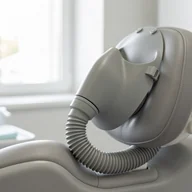
Nitrous oxide is the lightest and least expensive sedation option, and the only one that lets you drive yourself home. Published clinical guidance says the calming effect starts within three to five minutes and that pure oxygen at the end flushes the gas out.

Sedation For Dental Anxiety
Published clinical guidance lists the situations sedation exists for: fear of dental treatment, fear of needles that makes numbing injections unbearable, a very sensitive gag reflex, very sensitive teeth, claustrophobia in the treatment chair, difficulty controlling movement, and physical, behavioural or cognitive needs that make relaxing difficult.
Sedation For Oral Surgery
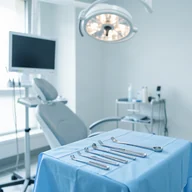
Oral surgery is where sedation stops being optional. Published guides put IV sedation at $250 - $1,000 or more per visit and general anesthesia for oral surgery at $800 - $2,000 per procedure, and clinical guidance notes that an oral surgeon may give anesthesia before the procedure or a dental anesthesiologist may provide it while your dentist treats you.

Sedation Dentistry For Children
Published clinical guidance notes that where a child is anxious, a dentist may use a liquid sedation such as midazolam syrup (Versed). The reasons are the same as for adults: fear, an inability to hold still, a strong gag reflex, or treatment that takes longer than a child can manage.
Areas we serve
Louisville
Sedation Dentistry in Louisville, KY - costs, water and soil notes.

St. Matthews
Sedation Dentistry in St. Matthews, KY - costs, water and soil notes.
Jeffersontown
Sedation Dentistry in Jeffersontown, KY - costs, water and soil notes.

Shively
Sedation Dentistry in Shively, KY - costs, water and soil notes.
Fern Creek
Sedation Dentistry in Fern Creek, KY - costs, water and soil notes.

Okolona
Sedation Dentistry in Okolona, KY - costs, water and soil notes.

Newburg
Sedation Dentistry in Newburg, KY - costs, water and soil notes.

Buechel
Sedation Dentistry in Buechel, KY - costs, water and soil notes.

Highview
Sedation Dentistry in Highview, KY - costs, water and soil notes.
Pleasure Ridge Park
Sedation Dentistry in Pleasure Ridge Park, KY - costs, water and soil notes.

Valley Station
Sedation Dentistry in Valley Station, KY - costs, water and soil notes.

Middletown
Sedation Dentistry in Middletown, KY - costs, water and soil notes.
Anchorage
Sedation Dentistry in Anchorage, KY - costs, water and soil notes.
Prospect
Sedation Dentistry in Prospect, KY - costs, water and soil notes.
Sedation Dentistry tools & calculators
All 20 free Sedation Dentistry tools
Cost calculators, comparisons and checklists. No sign-up.

Cost calculator
Estimate the range for a case in about a minute.
Cost guide
Every published appliance range, in one page.
Consultation checklist
What to bring and what to ask before you commit.
Knowledge quiz
Ten questions on costs, timing and coverage.

Sedation advisor
Eight questions that point to an appliance path.
Cost & Payment tools
Estimator, coverage checker, financing, payment plans, retainer cost, value over time

Cost & coverage tools
Sedation cost estimator, insurance and CDT code checker, multi-procedure planner
Compare & choose tools
Nitrous vs oral vs IV sedation option selector
Prepare & safety tools
Appointment-day planner, medical-history and medication checklist, questions to ask
Checklists & Answers tools
Practice questions, records and X-ray checklist, second opinion, smile check
Sedation Dentistry resources
Blogs
Cost, timing and buying guides for Louisville families.
Problems
The bite and smile issues families ask about most.
Watch
Video walkthroughs and what to expect.
FAQ
The questions we get asked most.
How it works
The request, the match, the quotes.

About
Who this free matching service is for in Louisville.